


 Myrte de Vries
Kruidvat is making beauty more personal with its new campaign: “You decide what beauty is”
Kruidvat recently launched the campaign “You Decide What Beauty Is.” This campaign isn’t about a new mascara or the latest beauty trend, but rather about a social issue that’s becoming increasingly relevant in the world of beauty: the influence of social media and algorithms on our perception of beauty.
When your feed decides what you find beautiful
These days, all it takes is watching one video about a certain make-up look, and before you know it your feed is full of similar videos. If you keep seeing the same faces, trends and looks, it can also influence what you yourself come to see as ‘beautiful’. With this campaign, Kruidvat wants to make people aware of that influence and at the same time encourage them to discover their own taste in beauty.
It was precisely because the campaign is rolled out in so many different ways that it caught our attention. Reason enough to take a closer look at it from a marketing perspective. How does Kruidvat connect a social issue like this to its own brand, and how is that message translated across different channels?
A social issue that fits the brand
Brands speaking out on social issues is nothing new. Sometimes it leads to strong campaigns, sometimes it mostly feels like a brand just wants to be part of the conversation. For Kruidvat, the connection is fairly obvious. Beauty is an important category for the brand, and with ‘Alle Beauties van Nederland’ (All the Beauties of the Netherlands), Kruidvat has long positioned itself as an accessible beauty brand. A campaign about the influence of algorithms on beauty ideals builds on that.
As a result, the social issue isn’t separate from what Kruidvat sells, but plays out right in the world the brand operates in. It’s too soon after the launch to judge whether the campaign will ultimately be a success. But the choice does feel logical. They aren’t just jumping on a social theme, they’re choosing a conversation that genuinely fits the brand.
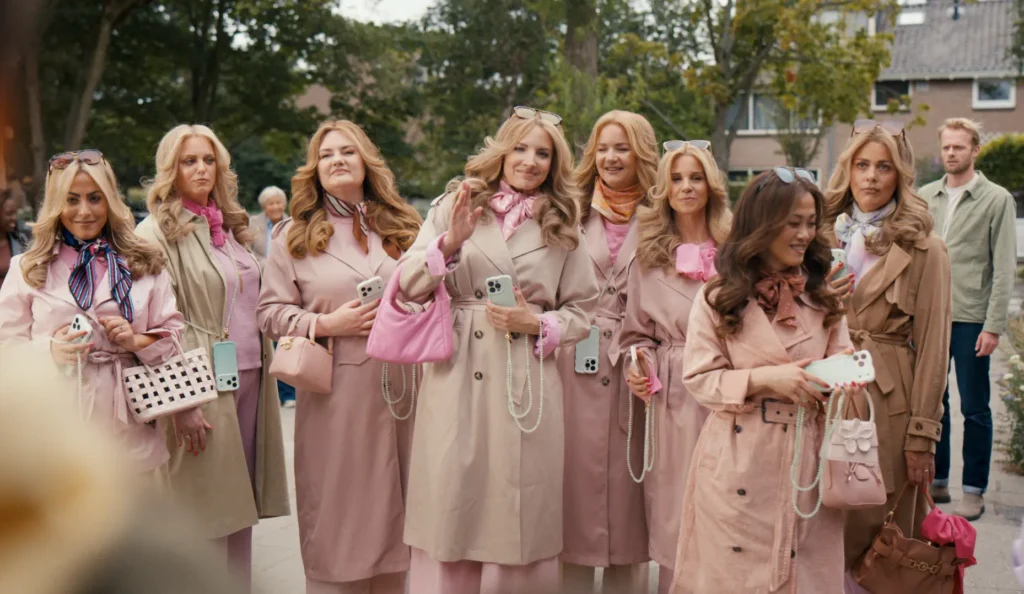
Still from the Kruidvat commercial for ‘Wat beauty is, bepaal je mooi zelf’ (You decide what beauty is).
One campaign, but not the same content everywhere
Kruidvat also takes a broad approach in its marketing execution. In the TV commercial we see Lies, the familiar face of Kruidvat, who notices that her Instagram and TikTok feeds influence her idea of beauty. For the campaign visuals, Kruidvat also used street casting, bringing in a wide range of people, looks and styles.
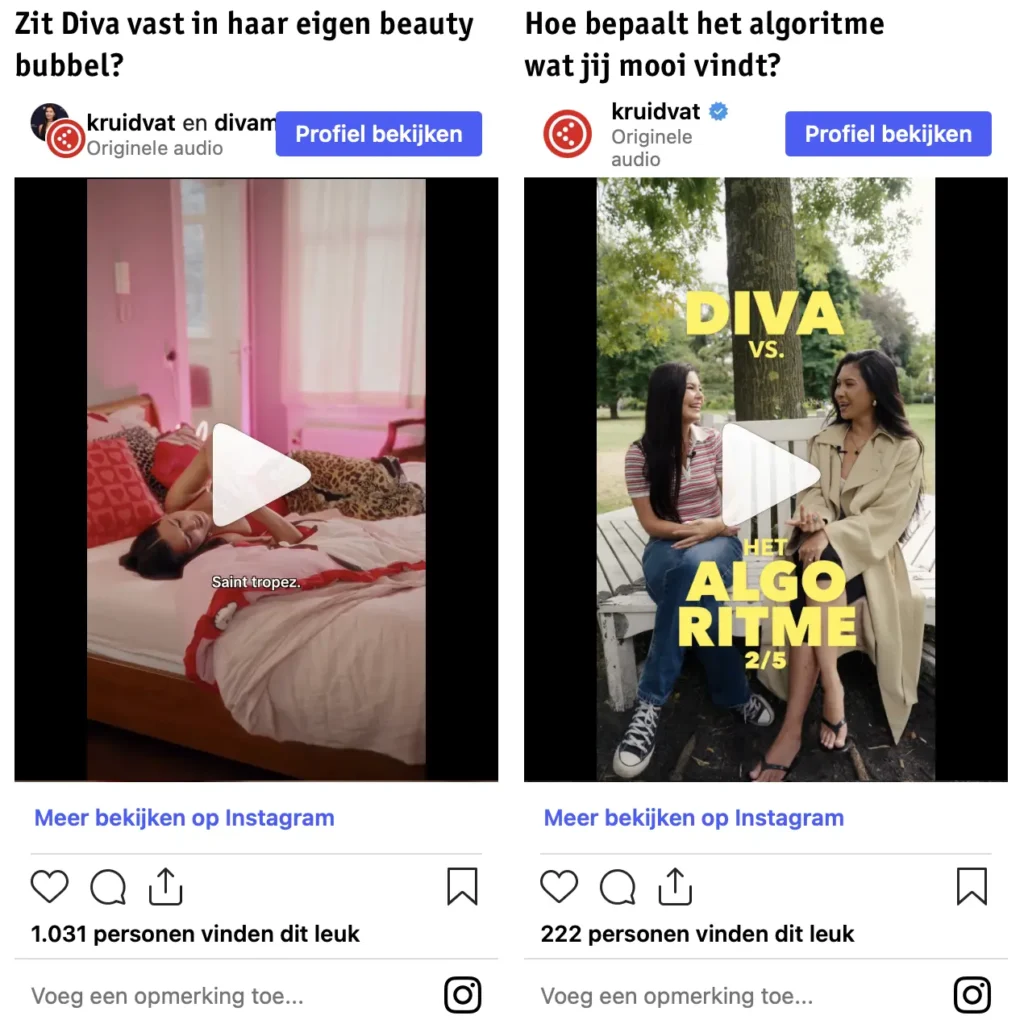
On social, the brand works with creators and formats such as GRWM for real and expectation vs. reality. The five-part series Diva vs. The Algorithm goes deeper: influencer Diva Brons explores topics such as the ‘beauty bubble’, comparing yourself online and the influence of algorithms, together with creators and experts. The campaign also appears in the Kruidvat magazine, in stores and around the beauty range. In this way, Kruidvat goes broad and brings the campaign to life through different channels and different people.
More than just reach
What really stands out to us at Content Collectiv is that Kruidvat isn’t simply spreading one campaign across as many channels as possible. Each part has its own function. The commercial introduces the topic to a broad audience, the series with Diva Brons leaves room for depth, and through creators the story gets different faces and personal experiences.
It’s precisely this use of creators that fits the topic so well. If your campaign revolves around the idea that there isn’t one single beauty ideal, you want to see that reflected in the people telling the story. So the creators don’t just provide reach, with their different styles and beauty routines they also support the message of the campaign.
And that is where the interesting marketing choice lies for us. Kruidvat sells beauty products and at the same time joins the conversation about the influence the beauty world and social media can have on how we see beauty. That could easily have felt contradictory. But by linking the campaign to ‘Alle Beauties van Nederland’, Kruidvat actually further establishes itself as a beauty brand where no single beauty ideal takes centre stage, but where there is room for different styles, looks and ideas about what beautiful is.
What do we take away from this?
Not every brand needs to suddenly speak out on a social issue. In fact, if the link with the brand isn’t clear, it can quickly feel forced. What Kruidvat does interestingly here is stay close to its own category. It picks a topic that plays out within beauty, but is big enough to say more than just something about a product.
As far as we’re concerned, the same goes for responding to other current topics. We recently saw a drinks brand jump on a viral commercial that sparked a lot of discussion, while the link with the brand was hard to find. It mostly seemed meant to be funny and topical. But just because something goes viral doesn’t mean you have to do something with it as a brand. Sometimes a topical post simply adds too little, and it’s stronger to let it pass.
For us, that may be the strongest thing about Kruidvat’s campaign. A social issue doesn’t have to be separate from marketing to be relevant. If the topic genuinely fits the brand, it can actually help show more clearly what you stand for as a brand.
Want to know more about the campaign and the thinking behind it? Kruidvat explains it in its official campaign announcement (in Dutch).
More Insights
 11 November 2026This is why the comments under your post are also part of your content strategy
 9 November 2026From scrolling to booking: TikTok wants to take over more of your customer journey
 26 October 2026From Influencer to Uitfluencer: Why Heineken Wants to Connect People Offline
 15 October 2026Are followers still the most important social media KPI?
Curious what this means for your brand?
We are happy to think along with you. Book a free consultation.
book a consultation